
Published 2 June 2026 · Sash Window Draught Proofing

Period sash windows provide architectural character, but original single glazing and ageing seals can reduce comfort, increase heating demand and allow external noise into the home. Two of the most practical improvement options are sash window draught proofing and secondary glazing.
Both approaches can be used in Victorian and Georgian properties. Both can be installed reversibly without changing the external appearance of the building. However, they address different problems and offer different levels of performance.
This guide compares cost, return on investment, thermal efficiency, noise reduction and heritage compatibility so you can choose the right option for your property.
Draught Proofing and Secondary Glazing: The Key Difference
Draught proofing improves the existing sash window by sealing gaps around the moving sashes, meeting rails, staff beads and frame. It reduces uncontrolled air movement without adding another pane of glass.
Secondary glazing installs a separate, independent glazed unit on the room side of the original window. This creates an insulating air gap and adds an additional barrier against heat loss and sound transmission.
In simple terms:
- Draught proofing targets air leakage.
- Secondary glazing targets heat transfer, air leakage and external noise.
- A combined installation provides the strongest overall improvement.
The right choice depends on the condition of your existing windows and your main priority.
At-a-Glance Comparison
| Factor | Sash Window Draught Proofing | Secondary Glazing for Sash Windows |
|---|---|---|
| Typical cost | £150–£300 per window | £400–£800 per window |
| Indicative ROI | Approximately 2 years | Approximately 5 years |
| Heat loss reduction | Up to 30% | Up to 70% |
| Noise reduction | Approximately 3–5 dB | Up to 50 dB with acoustic specification |
| Effect on original window | Improves and retains the existing window | Adds an internal glazed system |
| External appearance | Unchanged | Unchanged |
| Reversible | Yes | Yes |
| Planning permission | Not required for our reversible systems | Not required for our reversible systems |
| Best suited to | Draughts, low upfront cost and basic comfort | Noise, maximum thermal improvement and demanding locations |
These figures are indicative. Actual results depend on window size, glass specification, frame condition, installation quality, room position and exposure to traffic or wind.
Option 1: Sash Window Draught Proofing
Professional draught proofing involves installing discreet seals into the existing sash window. The system is designed to maintain normal operation while closing the gaps that allow cold air and sound to pass through.
It is particularly effective where the window rattles, whistles or feels cold around the edges.
What draught proofing improves
- Cold air infiltration around the sashes.
- Rattling and movement in loose window frames.
- Heat loss caused by gaps and poorly fitting components.
- Minor external noise entering through air gaps.
- General comfort near the window.
Draught proofing can reduce heat loss by up to 30% and typically reduces noise by around 3–5 dB. This is a meaningful improvement for comfort, but it is not designed to provide acoustic soundproofing against heavy traffic, sirens or aircraft.
For a wider overview of the process, see our guide to draught elimination for sash windows. We also explain the specific considerations involved in Victorian sash window draught proofing.
Cost and payback
Professional draught proofing generally costs £150–£300 per window. With reduced heat loss and lower heating demand, the indicative return on investment is approximately two years, although this varies with energy usage and the number of windows treated.
Choose Draught Proofing If…
- Your main problem is a noticeable cold draught.
- Your sash windows are structurally sound but poorly sealed.
- You want the lowest-cost improvement.
- Noise is present but not your primary concern.
- You want to improve several windows within a limited budget.
- You are planning restoration work and want to address basic performance first.

Option 2: Secondary Glazing for Sash Windows
Secondary glazing adds a discreet internal window behind the original sash. The original timber, period glass, glazing bars and external appearance remain in place.
The new unit can be specified with slim frames, a vertical sliding opening style or acoustic laminated glass. The design should reflect the proportions and operation of the original window wherever possible.
What secondary glazing improves
- Heat transfer through single glazing.
- Cold radiant surfaces near the window.
- Air leakage when combined with effective seals.
- Traffic, construction and aircraft noise.
- Draughts without replacing the original sash window.
- Comfort in rooms facing busy roads.
Secondary glazing can reduce heat loss by up to 70%. Acoustic units can reduce external noise by up to 50 dB, depending on the glass, cavity depth, frame design and frequency of the noise.
This makes it the stronger option for homeowners searching for sash window soundproofing cost information because it provides an actual acoustic barrier rather than simply sealing gaps.
The secondary glazing service from Sash Window Draught Proofing explains the available approaches for period properties. Our noise reduction service covers acoustic specifications in more detail.
Cost and payback
Secondary glazing typically costs £400–£800 per window. The indicative return on investment is approximately five years. The higher initial cost reflects the additional frame, glazing, bespoke measurements and installation.
It remains substantially less disruptive than replacing original sash windows. It can also offer a better heritage outcome where external replacement windows or double glazing would alter the character of the property.
Choose Secondary Glazing If…
- Traffic noise is affecting sleep, work or conversation.
- Your home is close to a busy road, railway or construction site.
- You want the largest possible reduction in window heat loss.
- Your original windows must remain in place.
- The property is listed or located within a Conservation Area.
- You are prepared to make a larger initial investment for stronger long-term performance.
Thermal Efficiency for Sash Windows: Which Performs Better?
The main thermal weakness of a traditional sash window is usually the combination of single glazing and air leakage.
Draught proofing addresses the leakage component. It can make a room feel warmer quickly because cold air is no longer moving through the frame. However, the original single pane remains thermally weak.
Secondary glazing addresses both problems. The additional pane creates a still air cavity between the original window and the secondary unit. With appropriate seals and low-emissivity or acoustic glass, it reduces the amount of heat escaping through the window.
For this reason:
- Choose draught proofing when the window is highly leaky and the budget is limited.
- Choose secondary glazing when maximum thermal efficiency is the priority.
- Combine both when you want the best balance of air-sealing and insulation.
Our thermal efficiency guidance explains how window performance fits within a wider period-property improvement plan.
Sash Window Soundproofing Cost: Is Secondary Glazing Worth It?
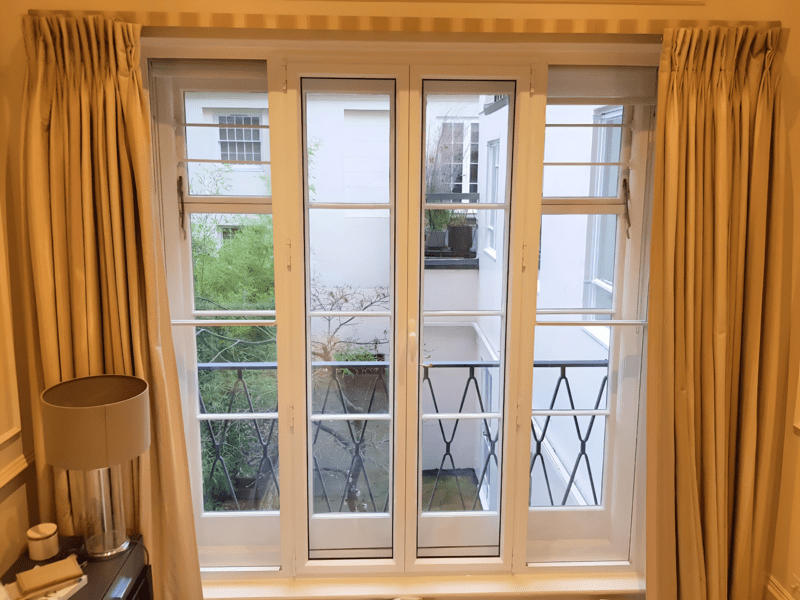
Draught proofing can reduce noise by closing gaps around the sash. This is useful for whistling, wind noise and some low-level street sound. Its typical reduction of 3–5 dB is limited because it does not add significant mass or a separate acoustic cavity.
Secondary glazing is more suitable for persistent urban noise. The air gap between the original window and the secondary unit helps interrupt sound transmission. Acoustic laminated glass can improve performance further.
The result depends on the source:
- General wind noise: draught proofing may be sufficient.
- Occasional traffic: draught proofing can provide a modest improvement.
- Constant road traffic: secondary glazing is usually more appropriate.
- Sirens, buses and construction: specify acoustic secondary glazing.
- Low-frequency noise: obtain a detailed survey, as no window system blocks every frequency equally.
For location-specific examples, homeowners can also review this secondary glazing guide for Hampstead and Belsize Park and the guide covering Islington and Canonbury.
Listed Buildings and Conservation Areas
Both draught proofing and secondary glazing are suitable for many listed and heritage properties when installed sensitively.
Our systems are:
- Fully reversible.
- Installed internally.
- Designed to preserve original timber and period glass.
- Intended to leave the external appearance unchanged.
- Not dependent on replacing the original sash window.
- Installed without planning permission.
The installation should still be designed around the property’s architectural details. This includes existing shutters, architraves, cornices, deep reveals, sash weights and operating clearances.
Secondary glazing is often particularly useful where external alterations are restricted. It can improve the internal performance of the window while preserving the elevation that conservation policies seek to protect.
For local context, see the area guidance for Kensington, Chelsea and Westminster. Specialist installation information is also available for Kensington and Chelsea and Westminster.
Additional borough-specific resources include the Chelsea secondary glazing guide, Kensington secondary glazing information, the Westminster guide and this Marylebone secondary glazing guide.
Should You Combine Draught Proofing and Secondary Glazing?
In many period properties, the most effective approach is to combine both measures.
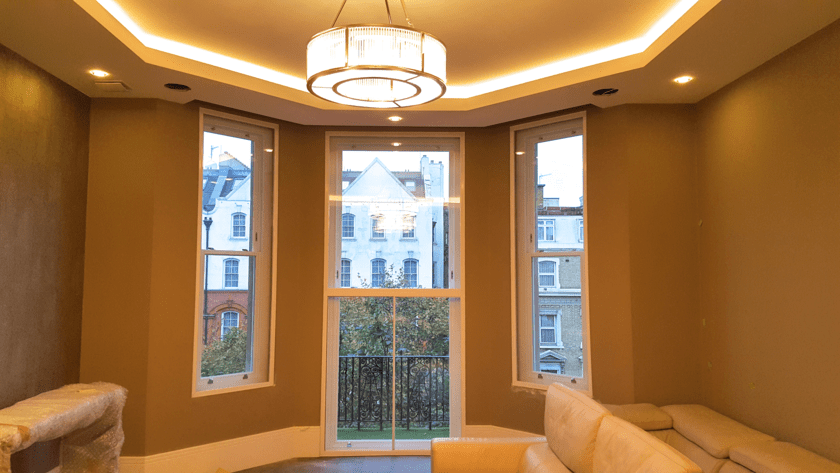
Draught proofing improves the original sash and reduces air movement. Secondary glazing then provides a second thermal and acoustic barrier. Treating the original window first also helps ensure that the secondary system performs consistently.
A combined approach is worth considering if:
- The sash window is both draughty and exposed to traffic noise.
- You want to retain original glass while improving comfort.
- The room is difficult to heat.
- You are refurbishing the window’s cords, pulleys or hardware.
- You want to avoid the cost and heritage impact of full window replacement.
Final Recommendation
There is no single answer for every period sash window.
Choose sash window draught proofing when you need a cost-effective improvement to draughts, comfort and basic thermal efficiency. At £150–£300 per window and an indicative two-year ROI, it is usually the sensible first step.
Choose secondary glazing when noise reduction and maximum heat-loss reduction are more important than the lowest upfront cost. At £400–£800 per window, it requires a larger investment but can reduce heat loss by up to 70% and noise by up to 50 dB.
Choose both when the property has severe draughts, high heating demand and persistent external noise.
A professional survey will identify whether the main weakness is the sash, the frame, the glazing or the surrounding reveal. Contact Sash Window Draught Proofing to discuss the condition of your windows, expected performance and the most suitable staged or combined solution.
Frequently Asked Questions
Is draught proofing or secondary glazing better for sash windows?
Draught proofing is better for reducing air leakage at a lower cost. Secondary glazing is better for significant heat-loss and noise reduction. Combining both often delivers the strongest overall performance.
How much does sash window soundproofing cost?
Secondary glazing designed for acoustic performance generally costs £400–£800 per window. The final price depends on window dimensions, access, frame design, glass specification and the required acoustic performance.
Does secondary glazing reduce heat loss more than draught proofing?
Yes. Draught proofing can reduce heat loss by up to 30%, while secondary glazing can reduce heat loss by up to 70%, depending on the existing window and the chosen system.
Are these solutions suitable for Grade II listed buildings?
Yes. Both approaches are reversible, retain the original window and do not require planning permission when installed as described. The design should still respect the property’s heritage details and any local conservation requirements.
Can secondary glazing be removed later?
Yes. Properly designed secondary glazing is reversible and can be removed without replacing the original sash window.